
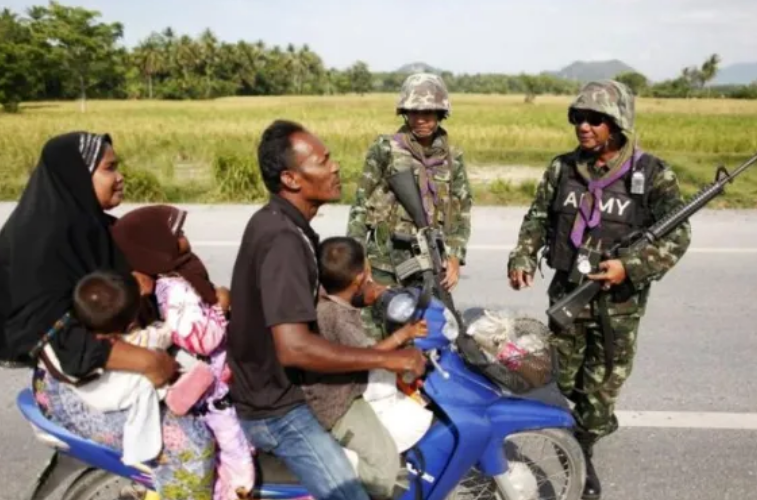
If you look at a map of Thailand, the “Deep South”—provinces like Pattani, Yala, and Narathiwat—looks like a narrow tail stretching toward Malaysia. But for those living there, it’s a region defined by a “frozen” conflict that feels like it’s beginning to thaw in all the wrong ways.
Since the insurgency reignited in 2004, the statistics are staggering: over 23,000 violent incidents and more than 7,000 deaths. Despite decades of “peace talks,” the question remains: are we seeing real progress, or just a sophisticated political dance?
A Spike in the Silence
For a while, things seemed to be cooling down. But 2024 and 2025 have brought a grim reality check. In just the first few months of last year, violence surged to levels nearly matching the entire previous year.
What changed? Analysts point to two major “red line” events:
- The Failed Ramadan Ceasefire: In March 2025, the Thai National Security Council and the BRN (the main separatist group) couldn’t agree on terms. The result? A wave of retaliatory attacks.
- The Death of Abdulroning Lateh: Following the killing of this senior BRN member in April 2025, the “rules of engagement” seemed to evaporate. We saw heartbreaking attacks on civilians—including a 9-year-old girl and elderly residents—marking a dark shift in the conflict’s nature.
The “Shinawatra Factor”
The political landscape is equally complicated. We now have a “double-decker” approach to leadership. Prime Minister Paetongtarn Shinawatra has taken a firm security stance, deploying more troops to bolster safety. Meanwhile, her father—former PM Thaksin Shinawatra—has re-emerged as an informal “peace-fixer.”
Thaksin has publicly pledged to end the unrest by late 2026. It’s a bold promise, but skeptics like Tita Sanglee from the ISEAS-Yusof Ishak Institute worry these efforts are “more symbolic than substantive.” Is it a genuine push for peace, or a move to show the Pheu Thai government is “doing something”?
The Malaysia Dilemma: Facilitator or Stakeholder?
For years, Malaysia has been the “honest broker” in these talks. But experts like Don Pathan are starting to question if that’s the right role. Because Malaysia shares a border, religion, and culture with the Malay-Muslims of the Deep South, they aren’t just observers—they are stakeholders.
Pathan suggests that instead of relying solely on a middleman, the Thai government needs to look directly at the BRN’s counterproposals, which include:
- Setting up dedicated negotiating teams.
- Releasing political prisoners.
- Allowing international observers to monitor ceasefires.
The Bottom Line
The BRN has stated they are willing to exist within the Thai state—but on their terms, under the Thai Constitution, and with a heavy emphasis on cultural identity.
The path to peace isn’t just about stopping bullets; it’s about addressing a century-old feeling of “forced assimilation.” Until the “Thainess” pushed by Bangkok meets the “Malay-Muslim identity” of the South halfway, the cycle of talks and tension is likely to continue.