If you feel like you’ve heard this story before, that’s exactly the problem.
It has been nearly eight years since the 2017 exodus. For a child born in the camps of Cox’s Bazar that year, “home” is a 10×15-foot bamboo shelter. They have never seen a paved road, never owned a passport, and—as of July 2025—are watching their world shrink even further.
1. The “Invisible” Influx
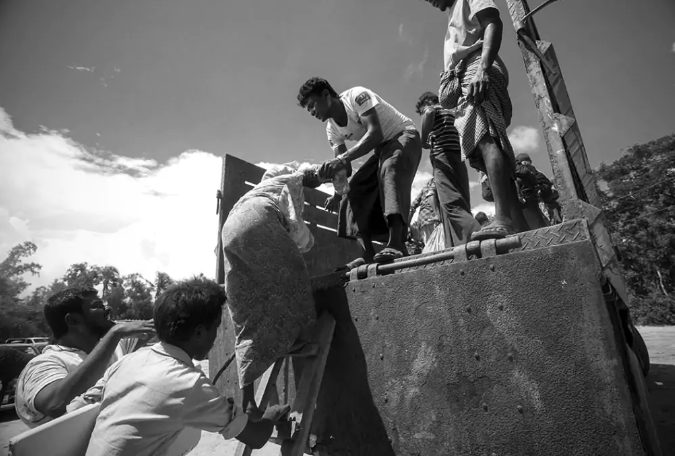
While the headlines have moved on, the border hasn’t closed. Over the last year, a “silent influx” has seen nearly 150,000 new arrivals flee into Bangladesh. They aren’t just fleeing the old regime; they are caught in the crossfire of a brutal civil war between the Myanmar military and the Arakan Army.
The camps, already the most densely populated places on earth, are now bursting at the seams.
2. The Math of Survival Doesn’t Add Up
The numbers for 2025 are, frankly, terrifying.
- The Ask: The 2025 Joint Response Plan (JRP) requested $934.5 million.
- The Reality: As of this month (July 2025), only about 35% of that funding has actually arrived.
When the world gets “fatigued,” the first things to go are “luxuries” like soap, menstrual hygiene products, and teacher stipends. We aren’t just talking about a lack of comfort; we are talking about a generation being stripped of their basic dignity because the global community’s checkbook is closed.
3. The Repatriation Mirage
In April of this year, there was a flash of hope when Myanmar “cleared” 180,000 Rohingya for return. But ask any refugee in the camps today, and they’ll tell you the truth: returning now is a death sentence. With villages in Rakhine State being burned to the ground and drone strikes becoming a daily occurrence, “repatriation” is currently a political talking point, not a reality. As Bangladesh’s interim government has pointed out, they cannot hold this door open forever without real, actionable help from the rest of us.
“Waiting has become our only occupation.” — A sentiment echoed across the 33 camps this month.
What can we do?
Awareness is the first step, but it can’t be the last.
- Advocate for the “Two-Year Plan”: For the first time, agencies are looking at a 2025–2026 multi-year strategy. Support the shift from “band-aid” fixes to sustainable living (skills training and mobile banking pilots).
- Pressure for Funding: Remind your local representatives that “donor fatigue” is a choice, not an inevitability.
The Rohingya aren’t asking for a miracle; they’re asking for the world to remember they still exist. Are we still listening?